In an unusual turn of events, the Federal Circuit will not be sitting for oral arguments this August. I imagine there will be lots of work being done at the court — just no oral arguments. I don’t remember a year when the court did not sit in August — so, this might be a first. The schedule for 2027 shows the court will hold oral arguments in August 2027.
This past week, Google was able to save countless lives in Venezuela with its earthquake detection system that displayed warnings to Venezuelans using its Android Earthquake alert system. [Link]. That reminded me of this earlier post: [Judge Chen asks: Would a method of predicting earthquakes be patent eligible?], which I will repeat below.
—————————————————————–
Judge Chen asks: Would a method of predicting earthquakes be patent eligible?
In a recent oral argument, Judge Chen noted the confusion caused by the Federal Circuit’s §101 case law. He posited a hypothetical as to whether an earthquake prediction system should be patent eligible? You can listen to his hypothetical here:
Judge Moore chimed in that she hopes a case like that will make its way to the Supreme Court, as the Court might actually find something patent eligible and there would be a bookend.
I will add this sound bite to the audio key page for Judge Chen.
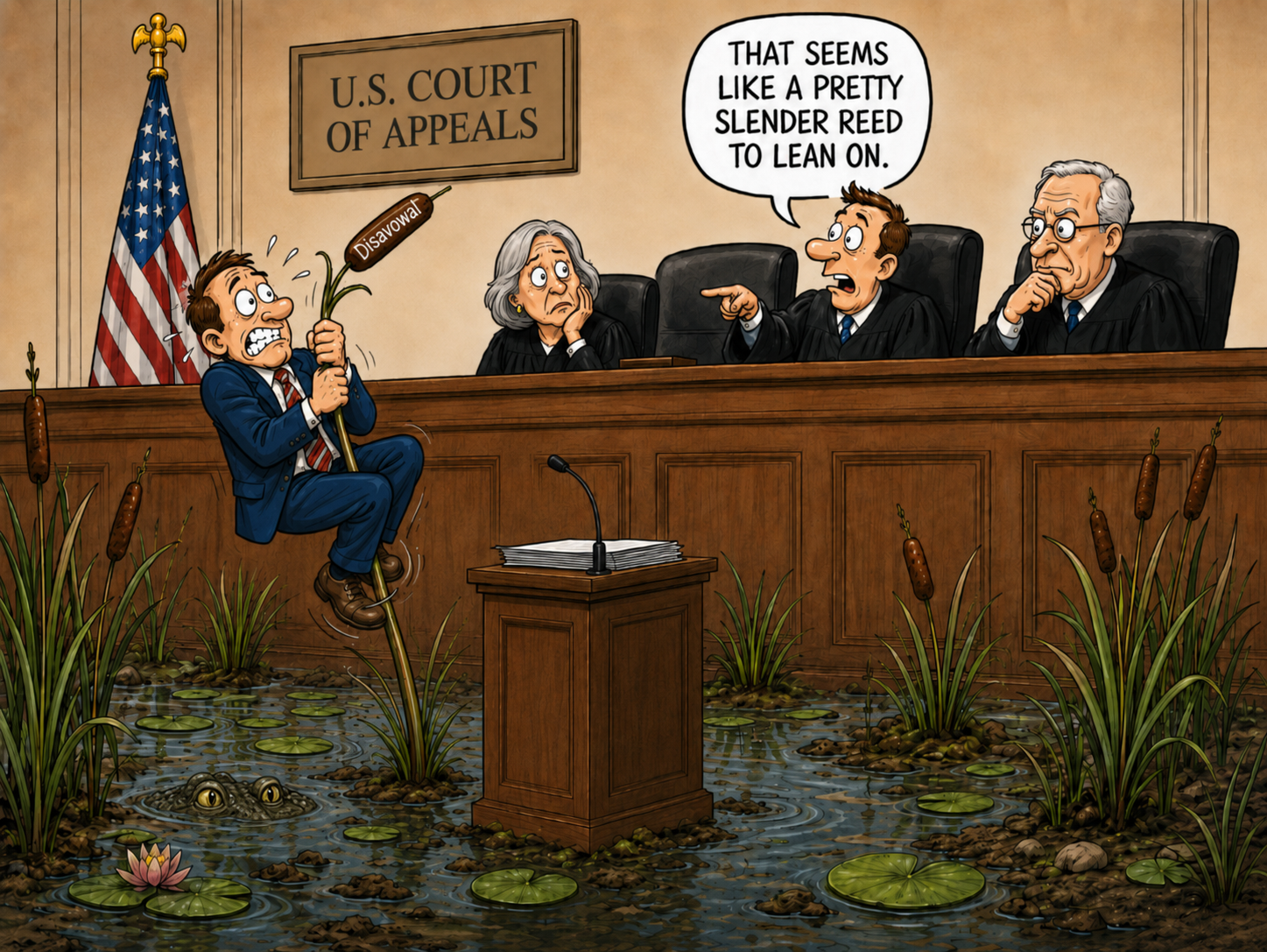
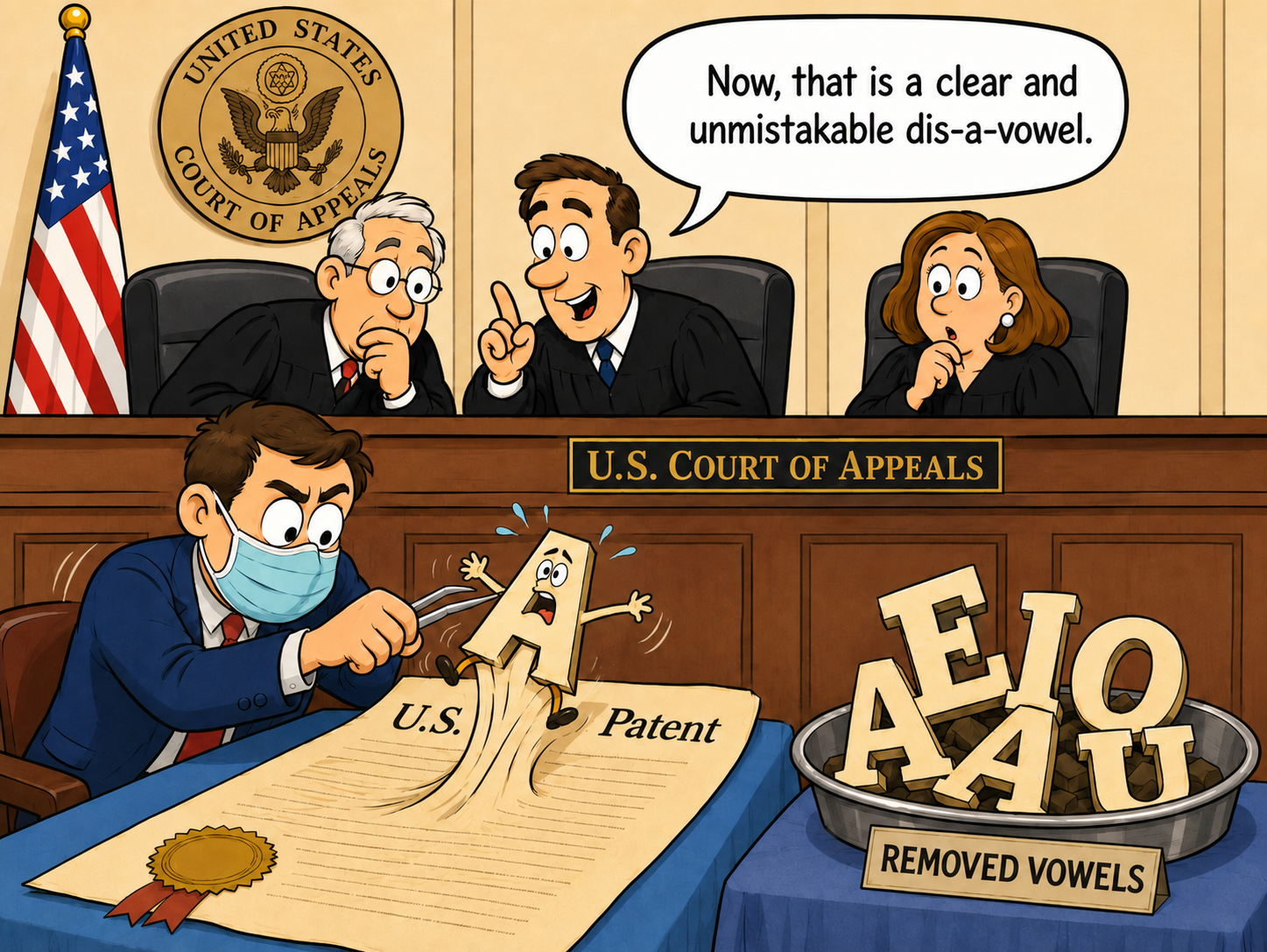
In Spine Solutions, Inc. v. Medtronic Sofamor Danek USA, Inc., we explained that even where a particular structure makes it “particularly difficult” to obtain certain benefits of the claimed invention, this does not rise to the level of disavowal of the structure. 620 F.3d 1305, 1315 (Fed.Cir.2010). It is likewise not enough that the only embodiments, or all of the embodiments, contain a particular limitation. We do not read limitations from the specification into claims; we do not redefine words. Only the patentee can do that. To constitute disclaimer, there 1367*1367 must be a clear and unmistakable disclaimer.
Thorner v. Sony Computer Entertainment America LLC, 669 F. 3d 1362, 1366-67 (Fed. Cir. 2012).
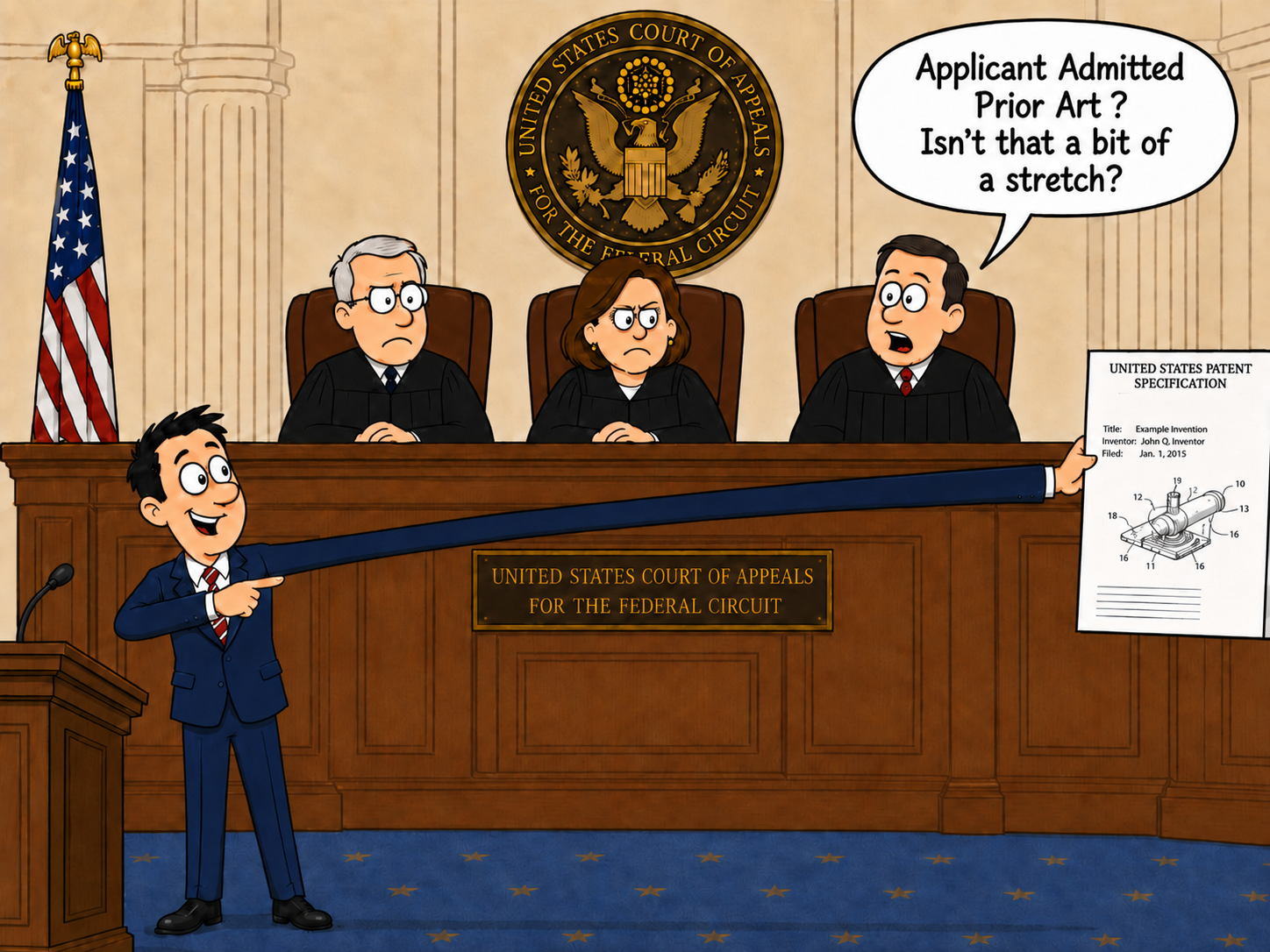
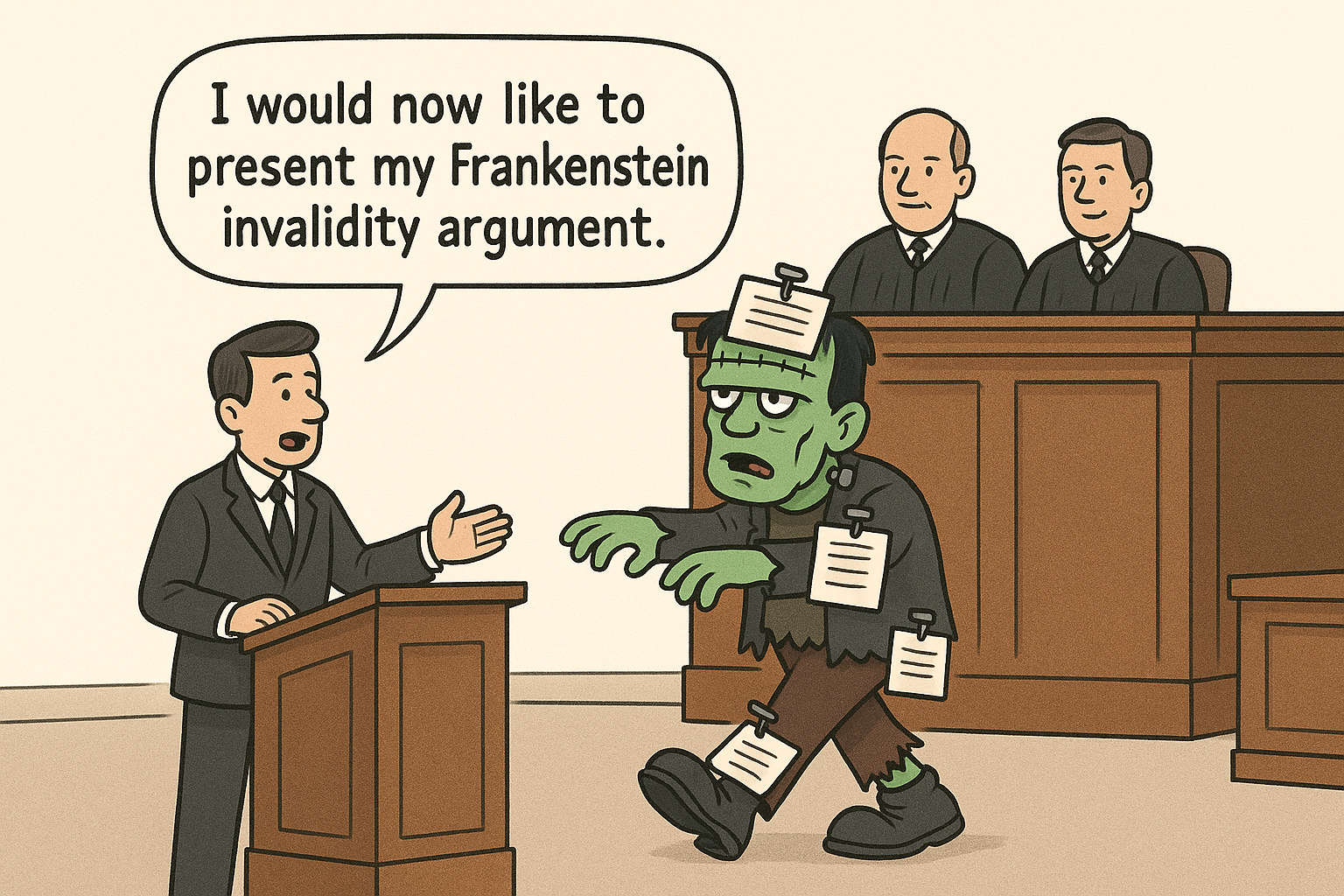
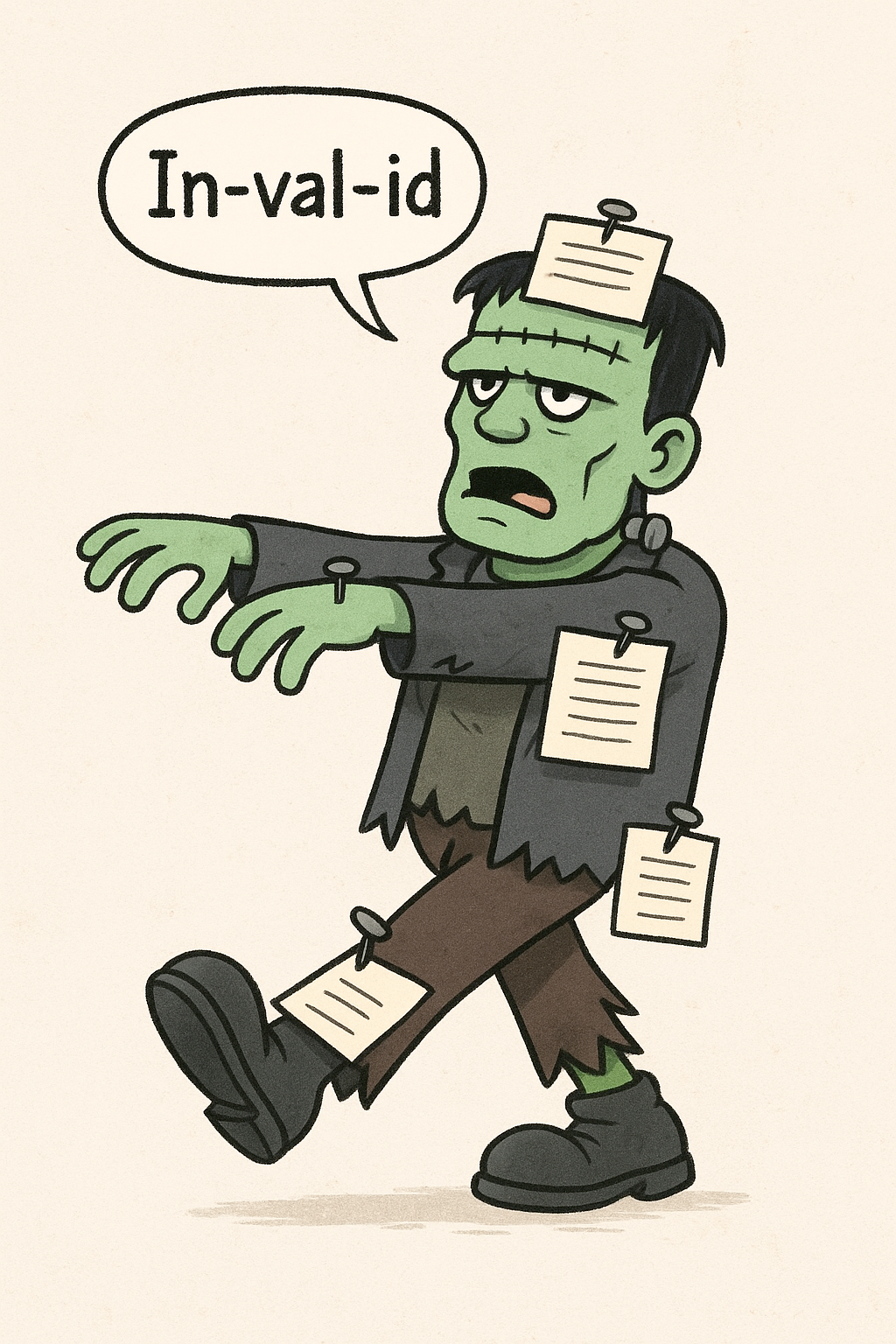
For more on Frankenstein arguments, see these posts: [Link], [Link], [Link], and [Link]. (In case you were wondering, the third appellate judge in the cartoon is appearing by telephone.)
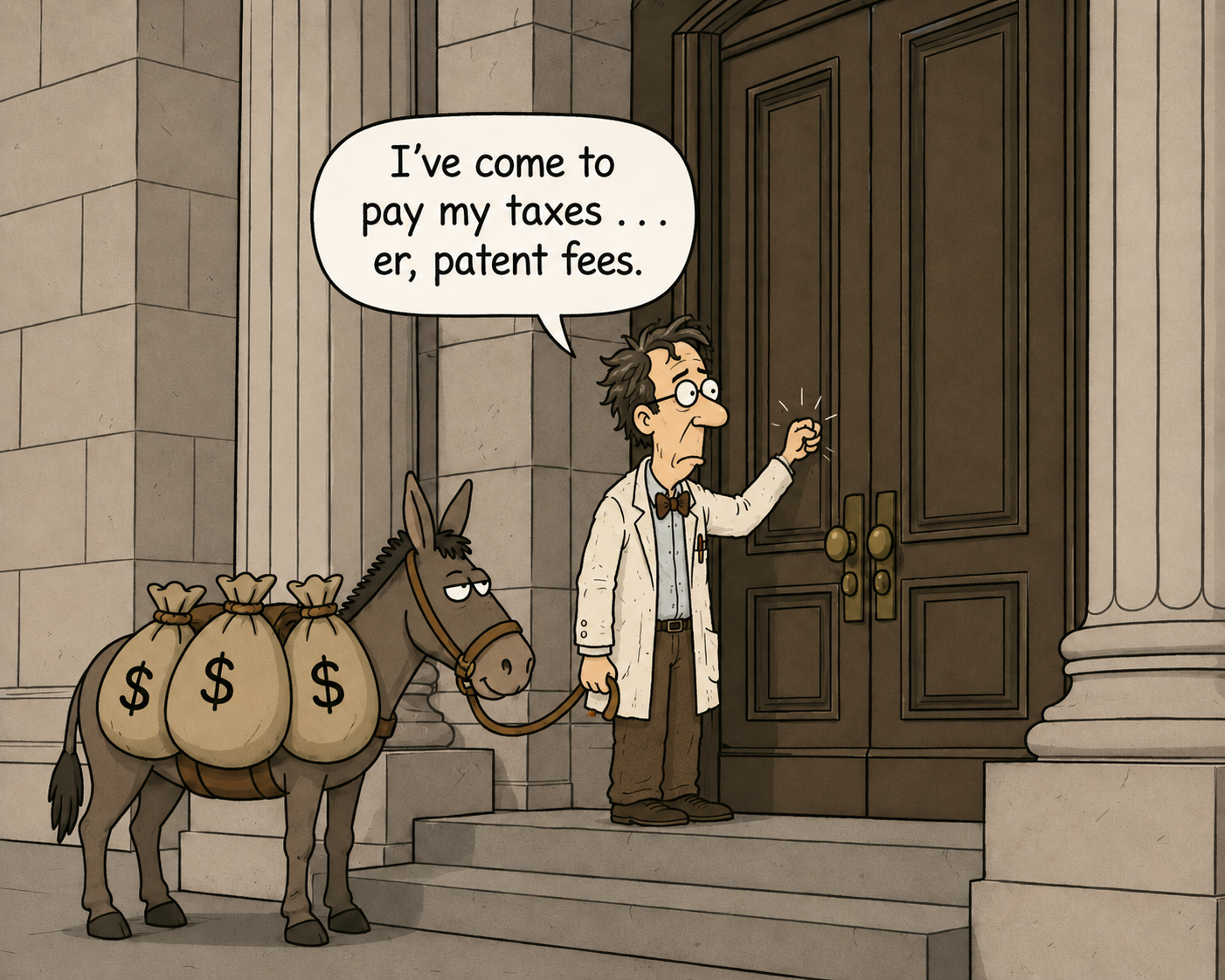
After browsing the decision today in State of California v. Mullin that has initially struck down the $100,000 fee for H-1B visas, my mind turned to patent fees. It might be an interesting article for someone to analyze when fees imposed by an Executive Branch agency such as the Patent Office rise to the level of a tax. Two recent fee changes would be good vehicles for analysis — namely, (1) the recent fee change that increased fees for some continuation applications, and (2) the recent fee change that imposed fees for citing a large number of references. I think that would make an interesting article.
We find the district court’s concern with “what the invention is” misplaced, and its requirement that the ‘081 drawings “describe what is novel or important” legal error. There is “no legally recognizable or protected `essential’ element, `gist’ or `heart’ of the invention in a combination patent.” Aro Mfg. Co. v. Convertible Top Replacement Co., 365 U.S. 336, 345, 81 S.Ct. 599, 604, 5 L.Ed.2d 592 (1961). “The invention” is defined by the claims on appeal. The instant claims do not recite only a pair of semi-circular lumens, or a conical tip, or a ratio at which the tip tapers, or the shape, size, and placement of the inlets and outlets; they claim a double lumen catheter having a combination of those features. That combination invention is what the ‘081 drawings show. As the district court itself recognized, “what Mahurkar eventually patented is exactly what the pictures in serial ‘081 show.” 745 F.Supp. at 523, 17 USPQ2d at 1357.
If you started practicing patent law recently, you might not have heard retired Chief Judge Paul Michel during oral argument. Here’s a good snippet of Chief Judge Michel during oral argument from years ago: